
Weather 101: Frost, Freeze, or Hard Freeze? Understanding the Differences Before the Cold Arrives
By Steve Monday | Chief Forecaster, Rowan County Weather & Regional Forecast
Tuesday, November 10, 2026
As temperatures prepare to tumble across Rowan, Davie, Davidson, and Cabarrus counties later this week, you may hear several familiar weather terms: frost, freeze, and hard freeze.
While these terms are sometimes used interchangeably, they describe different conditions, and understanding those differences can help you protect your plants, outdoor plumbing, and other cold-sensitive property.
With temperatures potentially dropping into the 20s this weekend, now is a good time for a Weather 101 refresher.
Frost: It Doesn't Have to Be 32 Degrees
One of the biggest misconceptions about frost is that the air temperature must fall below freezing for frost to develop.
That's not necessarily true.
Frost can form when grass, leaves, windshields, and other exposed surfaces cool to freezing, even when the official air temperature is several degrees warmer.
Frost is most common when:
-
Skies are clear.
-
Winds are light or calm.
-
Moisture is available near the ground.
-
Temperatures fall into the middle 30s or lower.
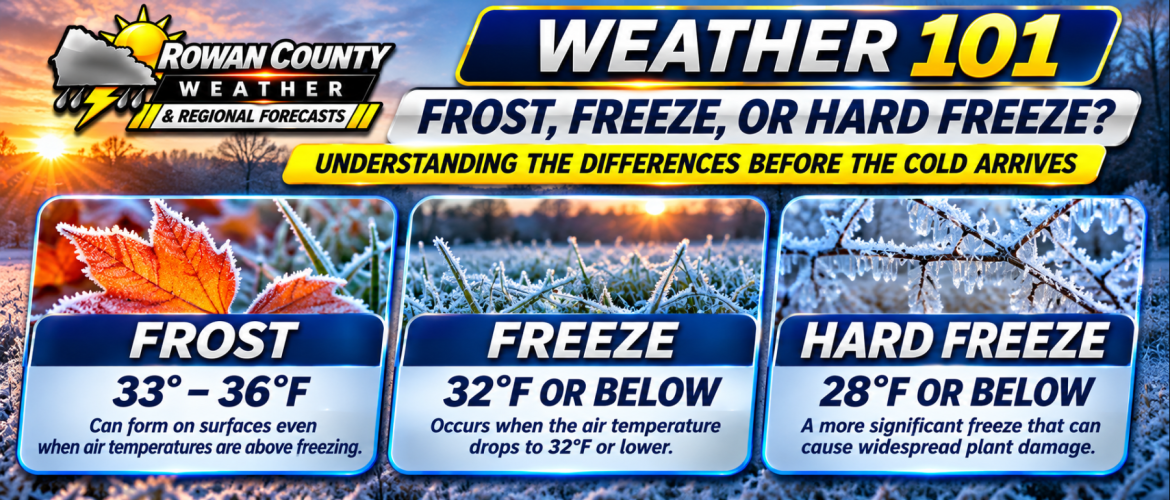
The National Weather Service generally considers a Frost Advisory when temperatures are expected to fall into the 33–36°F range under favorable conditions.
Although a light frost may not seem particularly threatening, it can damage tender plants and sensitive vegetation.
Freeze: When Temperatures Reach 32 Degrees
A freeze occurs when the air temperature drops to 32°F or below.
Unlike frost, which develops on surfaces, a freeze refers to the actual air temperature.
Freezing temperatures can damage or kill sensitive plants, particularly when the cold lasts for several hours.
A Freeze Warning may be issued when widespread freezing temperatures are expected during the locally defined growing season.
It's also important to understand that a freeze can occur without visible frost. Dry air or windy conditions may limit frost formation even when temperatures fall below freezing.
Hard Freeze: When the Cold Becomes More Serious
A hard freeze generally refers to temperatures falling to 28°F or lower for a sustained period.
This level of cold is especially damaging to tender vegetation and can effectively end the growing season for many plants.
Prolonged hard-freeze conditions can also create problems for exposed outdoor plumbing, irrigation systems, and other equipment vulnerable to freezing.
A temperature of 27°F for several hours presents a different level of risk than a brief dip to 31°F.
The duration of the cold matters just as much as the lowest temperature.
Why Your Backyard May Be Colder Than the Forecast
Have you ever noticed frost covering your lawn when your thermometer reads 35°F?
There is a scientific explanation.
Official air temperatures are generally measured several feet above the ground. On clear, calm nights, the ground loses heat rapidly, allowing surfaces near the ground to become colder than the surrounding air.
Cold air can also collect in valleys, low-lying fields, and sheltered rural locations.
That means someone living outside Salisbury, Mocksville, Lexington, or Concord may experience colder overnight conditions than a nearby observation station.
This is why localized frost can develop even when the general forecast suggests temperatures will remain slightly above freezing.
What About the Cold Weather Coming This Weekend?
After afternoon temperatures in the 70s Tuesday and Wednesday, a cold front is expected to bring a significant change to our region.
By Friday and Saturday, afternoon temperatures should be considerably colder, with highs generally in the 50s.
The greatest concern comes during the weekend and early next week, when overnight temperatures may fall into the 20s and lower 30s.
Some colder rural locations could experience hard-freeze conditions if temperatures reach 28°F or below for a prolonged period.
The exact temperatures and timing will continue to be refined as the colder air approaches.
How to Prepare
There are several simple steps you can take before temperatures drop:
-
Bring sensitive potted plants indoors whenever possible.
-
Cover tender outdoor vegetation with frost cloth or breathable fabric, securing the covering near the ground.
-
Disconnect garden hoses and protect vulnerable outdoor faucets.
-
Check irrigation systems and exposed plumbing before an extended freeze.
-
Make sure outdoor pets have appropriate protection from the cold.
-
Monitor updated forecasts, especially if you live in a rural or low-lying area.
Remember that a frost advisory or freeze warning may not always be issued once the growing season has officially ended. The absence of an alert does not mean freezing temperatures cannot occur.
The Bottom Line
Frost, freeze, and hard freeze are three different weather conditions with different potential impacts.
Frost can develop even when air temperatures remain above freezing. A freeze occurs at 32°F or below. A hard freeze generally involves temperatures of 28°F or lower for a sustained period.
With much colder weather approaching Rowan, Davie, Davidson, and Cabarrus counties, understanding those differences can help you make better decisions before the temperature drops.
Stay with Rowan County Weather & Regional Forecast for continued updates as we track the approaching cold weather.
rowancountyweather.com