
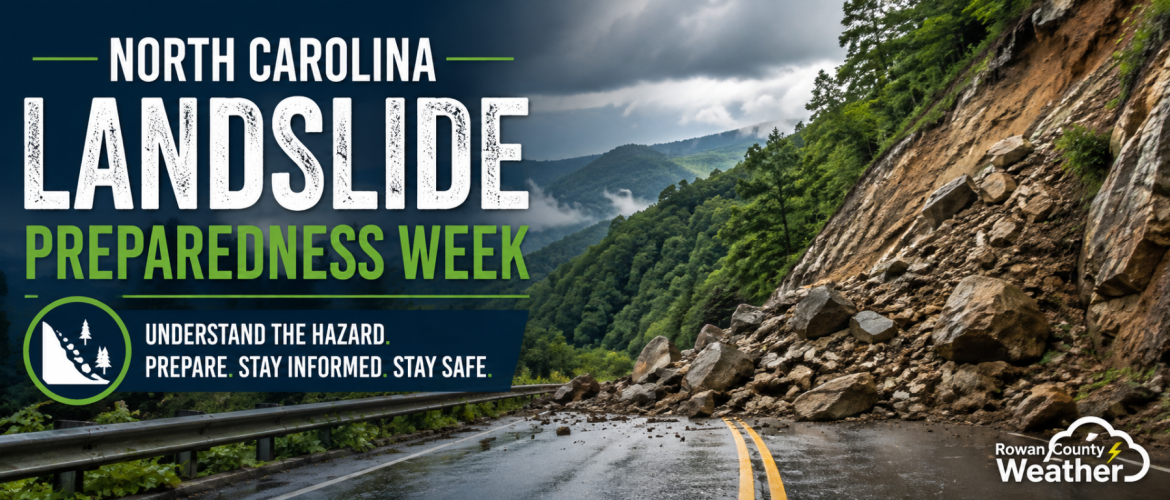
North Carolina Landslide Preparedness Week: Protect Yourself From Landslides
Throughout North Carolina Landslide Preparedness Week, we've talked about what landslides are, where the greatest danger exists, and what to do if a landslide is already occurring.
Today's topic brings all of that together: How can you protect yourself from landslides?
Landslides can happen quickly and sometimes with little warning. In North Carolina, they're most common in the mountains because of the steep terrain, although landslides can occur elsewhere in the state. Large rainstorms, hurricanes, freeze-thaw cycles, and human activity can all contribute to slope failures.
The best time to prepare isn't when the ground starts moving. It's before the heavy rain begins.
Know Whether You're in a Landslide-Prone Area
The first step is understanding your surroundings.
If you live, work, or are staying near steep slopes, mountain edges, drainage channels, or natural erosion valleys, learn about the landslide history of the area.
A location that has experienced landslides or debris flows in the past may be susceptible to them again.
This is particularly important when visiting western North Carolina. You may only be staying in a mountain cabin or campground for a few days, but you should still take a few minutes to look at the terrain surrounding you.
Ask yourself:
- Is there a steep slope above the property?
- Is the building located near a stream or drainage channel?
- Are there signs that the ground has moved previously?
- Where would I go if officials told me to evacuate?
A little awareness before severe weather arrives can make a big difference.
Watch for Changes Around Your Property
The ground can sometimes provide clues that a slope is becoming unstable.
Pay attention to new or unusual changes such as cracks developing in the ground, driveway, foundation, walls, or other structures.
Trees, fences, retaining walls, and utility poles that suddenly begin leaning or moving can also indicate ground movement.
Other warning signs can include doors or windows suddenly sticking, water appearing on a slope where it normally doesn't, bulging ground near the bottom of a slope, or broken underground utility lines.
One warning sign by itself doesn't necessarily mean a landslide is imminent, but sudden changes during or following significant rainfall should get your attention.
Listen as Well as Look
You may hear a landslide before you see it.
Unusual sounds such as trees cracking, rocks knocking together, or a low rumbling sound that becomes increasingly loud can indicate moving debris.
If you're near a stream or drainage channel, watch the water as well. A sudden change in water level or water becoming unusually muddy can indicate that debris is moving upstream.
During periods of prolonged or intense rainfall in mountainous terrain, remain especially alert to changes around you.
Don't Sleep Through the Danger
Some landslide events occur during periods of intense overnight rainfall.
If significant flooding or landslide concerns exist where you're staying, make sure you have a reliable way to receive weather alerts overnight.
Keep your phone charged and make sure emergency alerts can wake you.
If local officials issue an evacuation order, follow it promptly. Don't wait until you hear or see a landslide before deciding to leave.
Once debris begins moving, there may not be enough time to escape safely.
Have an Emergency Plan
Landslide preparedness should be part of your overall emergency plan.
Know how members of your family will communicate if you're separated. Identify where you would go if you had to leave your home or lodging, and keep important supplies ready.
An emergency kit should include basic necessities that could be needed if roads become blocked, utilities are disrupted, or you have to leave quickly.
If you're vacationing in the mountains, you don't necessarily need to bring your entire home emergency kit with you, but having flashlights, charged phones, medications, water, and other basic necessities available is a good idea.
If a Landslide Begins, Move Away From Its Path
If you're outside and notice a landslide or debris flow approaching, move away from its path as quickly as possible if you can do so safely.
Stay away from stream channels, valleys, and low-lying areas where debris and water may travel.
If escape isn't possible, curl into a tight position and protect your head and neck.
If you're inside a structure and debris is already moving outside, don't automatically run outdoors into the path of the slide. Move to the portion of the building farthest from the approaching debris, stay away from windows, and protect your head and neck.
The circumstances of every landslide are different, so always follow instructions from emergency officials when they're available.
Never Cross an Approaching Debris Flow
Debris flows aren't simply muddy water.
They can contain rocks, trees, soil, vehicles, and other material while moving rapidly downhill.
If you're near a bridge and a debris flow is approaching upstream, do not attempt to cross the bridge.
Likewise, if you're driving and encounter mud, rocks, or debris covering a mountain road, don't assume it's safe to drive through.
The roadway could be damaged beneath the debris, and additional material could come down the slope without warning.
Turn around when it is safe to do so.
Stay Away After a Landslide
The danger doesn't necessarily end when the ground stops moving.
Additional landslides can occur, especially when slopes remain saturated following heavy rainfall.
Stay away from the affected area and continue monitoring information from emergency officials.
Watch for flooding, damaged roads, downed power lines, broken utility lines, and structural damage.
If you see damaged utilities or roadways, report them to the appropriate authorities rather than attempting to investigate or repair them yourself.
Protecting Your Property Starts Before the Storm
If your home is located in an area with a known landslide hazard, consider having the property evaluated by a qualified professional.
Proper drainage can be especially important because directing additional water onto an unstable slope can make existing problems worse.
Some properties may benefit from professionally designed retaining structures, drainage improvements, or other mitigation measures.
These aren't projects to guess at. Altering drainage or attempting to stabilize a slope incorrectly could move the problem somewhere else or make conditions worse.
Plan. Prepare. Stay Informed.
The message behind Landslide Preparedness Week isn't that everyone should be afraid of a mountainside.
It's about understanding the hazard and knowing what to do if conditions become dangerous.
Know your surroundings. Watch for warning signs. Have an emergency plan. Pay attention during periods of heavy rain. Follow evacuation instructions. And stay away from an area after a landslide occurs.
Most importantly, don't wait until the ground starts moving to decide what you're going to do.
Preparation before the storm gives you the best opportunity to protect yourself and your family when every second matters.
I'll continue covering landslide safety and preparedness throughout North Carolina Landslide Preparedness Week.