
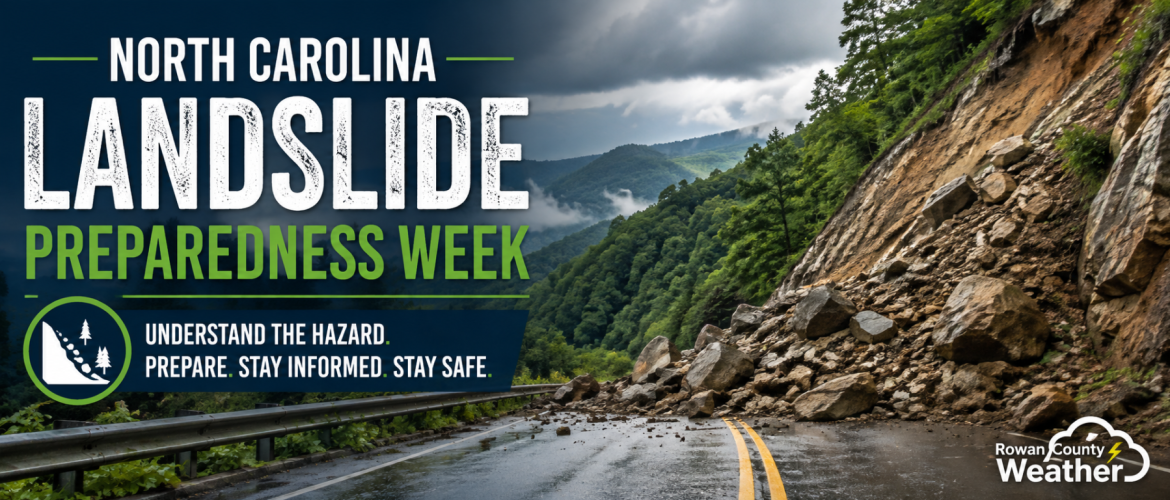
North Carolina Landslide Preparedness Week: Landslide? Stay Inside!
As North Carolina Landslide Preparedness Week continues, we've talked about what landslides are and whether you could be in a landslide danger zone.
Today's topic focuses on what to do when the danger becomes immediate.
It may seem natural to think that if a landslide threatens your area, you should immediately run outside and get away. But if a landslide is already occurring, going outside could put you directly in the path of falling rocks, moving debris, collapsing trees, or fast-moving water and mud.
That's why today's message is simple: Landslide? Stay inside!
If a Landslide Is Happening, Stay Indoors
If you are inside a building when a landslide begins, remain inside unless authorities have instructed you to evacuate or the building itself is in immediate danger.
Moving outside during an active landslide can expose you to hazards that may be difficult or impossible to see coming.
Landslides can carry much more than dirt. Moving material may contain large rocks, trees, branches, water, mud, and other debris. The force of that material can be tremendous.
Your safest immediate option may be to put as much protection as possible between yourself and the moving debris.
Move Away From the Side Facing the Landslide
If you can determine which direction the landslide or debris is coming from, move to an interior area or the side of the building farthest away from the approaching slide.
Stay away from windows and exterior walls facing the hazard.
If possible, take shelter beneath sturdy furniture and protect your head and neck.
The goal is to reduce your exposure to broken glass, falling objects, and debris that could enter or damage the structure.
Listen for the Warning Signs
Sometimes a landslide begins with clues that something is changing around you.
You may hear unusual sounds such as trees cracking, rocks striking one another, or a rumbling sound that becomes louder as material moves closer.
You might also notice sudden changes in water flow, mud or debris appearing where it normally doesn't, or objects such as trees, fences, utility poles, or retaining walls beginning to move or tilt.
During periods of heavy rainfall in mountainous terrain, don't ignore unusual sights or sounds.
They could provide precious seconds to move to a safer part of the building.
Don't Go Outside to See What's Happening
This can be especially important in an age when nearly everyone has a phone capable of recording video.
Don't go outside to photograph or record an active landslide.
A landslide or debris flow can move quickly, and additional portions of a slope can fail after the initial movement.
The first slide may not be the last.
Your priority should be protecting yourself and the people around you, not getting a better view of what is happening.
What If You're Driving?
The advice to stay inside applies differently if you're in a vehicle.
If you encounter rocks, mud, flowing debris, downed trees, or other evidence of a landslide across a mountain road, do not attempt to drive through it.
Stop at a safe distance and turn around if you can do so safely.
Never assume that because some debris has already fallen, the slope above the road is now stable. Additional rockfalls or landslides could occur.
Mountain roads can also be damaged underneath mud and debris, making it impossible to know whether the pavement ahead is still intact.
Evacuate Before the Landslide When Told to Do So
There is an important distinction between an active landslide and a situation where officials believe conditions could become dangerous.
If emergency officials issue evacuation instructions because of an increasing landslide or debris-flow threat, follow those instructions promptly.
Don't wait until you can see a landslide before leaving.
Evacuating before conditions become dangerous is very different from running outside once a landslide is already occurring around you.
Preparedness means making those decisions while there is still time to move safely.
Heavy Rain Means Stay Alert
In North Carolina, landslide concerns can increase during periods of heavy or prolonged rainfall, particularly across the mountains.
If you're staying in mountainous terrain during a significant rain event, pay attention to forecasts, alerts, and instructions from local emergency officials.
Remember that the danger may not immediately disappear when the rain stops. Saturated slopes can remain unstable, and additional landslides can occur after the heaviest rainfall has ended.
Don't Rush Back Outside
After a landslide occurs, remain cautious.
There may be additional slides, unstable ground, downed power lines, damaged utilities, flooding, or weakened structures nearby.
Continue following instructions from emergency officials and don't enter an affected area simply to look at the damage.
If you smell gas, see damaged electrical equipment, or notice other utility problems, stay away and report the situation to the appropriate authorities when it is safe to do so.
Today's Landslide Preparedness Message
If you're given time to evacuate before a landslide, follow evacuation instructions.
But if a landslide is already happening while you're inside a building, don't automatically run outdoors into an environment filled with moving and falling debris.
Stay inside, move away from the approaching landslide, protect your head and neck, and stay alert for additional movement.
Knowing what to do before an emergency happens can make those critical moments much easier to navigate.
I'll continue covering landslide safety and preparedness throughout North Carolina Landslide Preparedness Week