
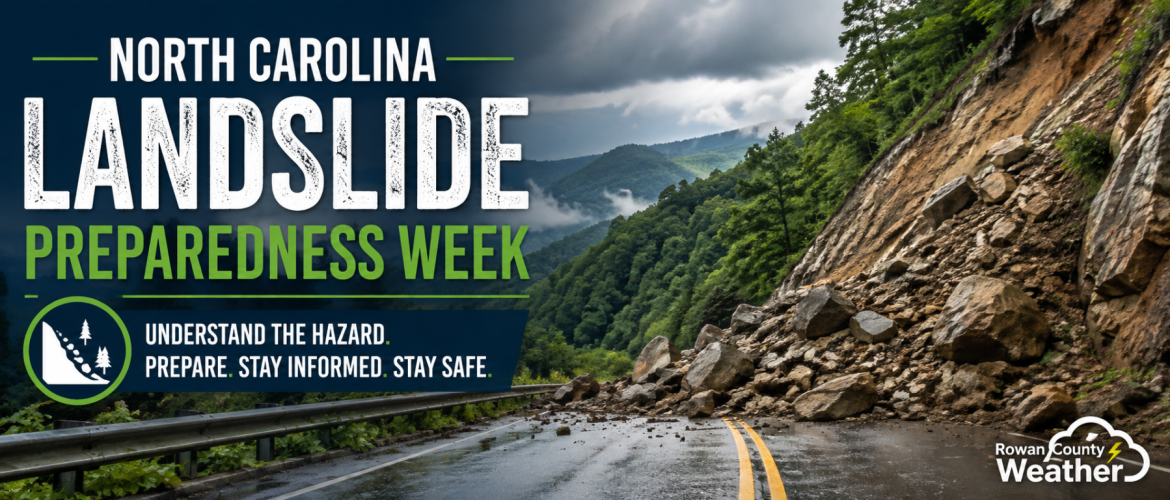
North Carolina Landslide Preparedness Week: Are You in the Landslide Danger Zone?
As North Carolina Landslide Preparedness Week continues, today’s topic focuses on an important question: Are you in the landslide danger zone?
Landslides can happen when soil, rock, and debris on a slope become unstable and begin moving downhill. While landslides are possible in different environments, the risk is not the same everywhere.
In North Carolina, geography plays a major role in determining where the greatest landslide hazards exist.
Western North Carolina Has the Greatest Risk
The greatest landslide danger in North Carolina is concentrated across the mountains and foothills of western North Carolina.
Steep slopes, mountainous terrain, local geology, and periods of significant rainfall can combine to create conditions favorable for landslides and debris flows.
People who live in these areas should be especially aware of the terrain surrounding their homes and communities. But landslide awareness isn't only important for mountain residents.
If you're traveling to western North Carolina for vacation, hiking, camping, sightseeing, or simply driving through the mountains, understanding the hazard can help you recognize potentially dangerous situations.
Look at the Terrain Around You
One of the first steps in determining your potential landslide risk is looking at your surroundings.
Homes, roads, businesses, campgrounds, and other locations near steep slopes, mountainsides, drainage channels, or the bottoms of steep valleys may face greater exposure to landslide or debris-flow hazards.
It's also important to remember that you don't necessarily have to be directly underneath a steep slope to be affected.
Material from a landslide can travel downhill, while debris flows containing water, mud, rocks, trees, and other material can follow natural drainage paths.
That means the hazard can extend beyond the location where the slope initially fails.
Has a Landslide Happened There Before?
Past landslide activity can provide an important clue about future risk.
Evidence that a slope has moved previously may indicate that the area has conditions capable of producing additional movement.
Signs of previous slope movement can include unusual changes in the landscape, old landslide scars, displaced or tilted trees, irregular ground surfaces, or areas where debris appears to have accumulated below a slope.
Knowing the history of the property and surrounding terrain can be particularly important when living or building in mountainous areas.
Heavy Rain Can Change the Risk
Even if a slope appears stable most of the time, weather conditions can change the situation.
Heavy or prolonged rainfall is one of the most important weather-related factors associated with landslide danger in North Carolina.
Rainwater can soak into the ground, increasing the amount of water within soil and rock. As the ground becomes saturated, the forces holding material on a slope can weaken.
The rainfall that occurred before a storm matters, too.
Several days of rain followed by another round of heavy rainfall can create a much different landslide risk than heavy rain falling onto relatively dry ground.
Tropical systems can be especially concerning because they can produce tremendous amounts of rainfall over mountainous terrain.
Roads Can Be Part of the Danger Zone
Mountain roads frequently travel beside steep slopes or through areas where rock and soil have been cut away to make room for the roadway.
During and after periods of heavy rain, rockfalls, landslides, or debris flows can affect these roads with little warning.
If you encounter rocks, mud, flowing debris, or other signs that a slope may be failing, don't attempt to drive through the affected area. Conditions can change quickly, and additional material could come down the slope.
You Don't Have to Live in the Mountains to Pay Attention
For most of the Piedmont, including Rowan County and surrounding areas, the widespread landslide hazard isn't comparable to what exists across the North Carolina mountains.
But that doesn't make landslide preparedness irrelevant.
Many people from our region regularly travel west for vacations, weekend trips, outdoor recreation, or mountain getaways. Understanding landslide hazards before you arrive is much better than learning about them while heavy rain is already falling.
Know Your Risk Before Heavy Rain Arrives
If you live in or are traveling to mountainous terrain, don't wait until a major rain event to start thinking about landslides.
Learn about the terrain around where you're staying. Pay attention to nearby slopes and drainage areas. Follow weather forecasts when significant rainfall is expected, and take warnings about flooding and landslide potential seriously.
Knowing whether you're in a potentially vulnerable location can give you valuable time to make decisions before conditions become dangerous.
Today's Landslide Preparedness Week question is simple: Are you in the danger zone?
For North Carolina, the answer depends heavily on where you are, the terrain surrounding you, and the weather conditions affecting that terrain.
Throughout North Carolina Landslide Preparedness Week, I'll continue looking at what you should know about landslide hazards, warning signs, and preparedness.