
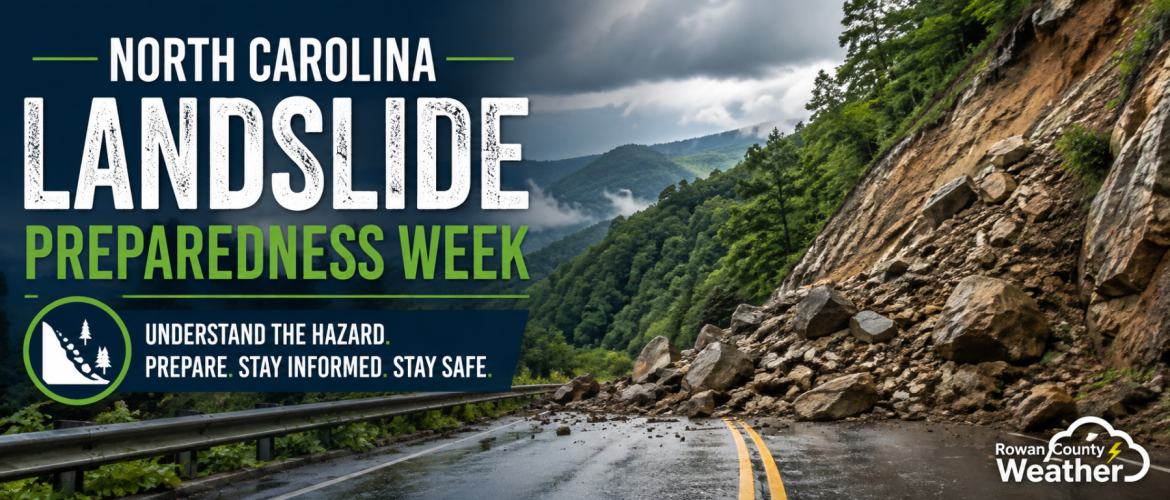
North Carolina Landslide Preparedness Week: Understanding the Hazard Beneath Our Feet
This week is North Carolina Landslide Preparedness Week, an opportunity to learn more about landslides, where they happen, what causes them, and how North Carolinians can prepare for this potentially dangerous natural hazard.
When we think about weather-related hazards in North Carolina, thunderstorms, flooding, hurricanes, tornadoes, and winter storms may come to mind first. But in parts of our state, especially across the mountains and foothills, landslides are another hazard worth understanding.
Throughout Landslide Preparedness Week, Rowan County Weather will take a closer look at landslides and the conditions that can lead to them. To begin, let's answer the most basic question: What exactly is a landslide?
What Is a Landslide?
A landslide is the movement of rock, soil, debris, or a combination of those materials down a slope.
Gravity is ultimately responsible for pulling the material downhill, but something often changes the stability of the slope before movement begins. That change can happen gradually over a long period of time or very quickly.
Landslides can range from relatively small movements of soil to major events involving enormous quantities of rock and debris. Some move slowly enough that their effects develop over days, months, or even years. Others can occur suddenly and move rapidly, giving people in their path very little time to react.
What Can Trigger a Landslide?
Several factors can contribute to slope failure, but water is especially important in North Carolina.
Periods of heavy or prolonged rainfall can saturate the ground. As water works its way into soil and rock, a slope can become less stable. Eventually, gravity may overcome the forces holding that material in place.
This is one reason landslide awareness can be important during tropical systems or extended periods of heavy rain. Even after the heaviest rain has ended, saturated slopes can remain a concern.
Other factors can contribute to landslides as well, including erosion, changes to a slope caused by construction or excavation, natural weaknesses in rock and soil, and previous landslide activity.
Often, it isn't one factor alone but a combination of conditions that leads to a slope failing.
Are All Landslides the Same?
No. "Landslide" is a broad term covering several different types of movement.
Some events involve large sections of rock breaking loose. Others involve soil and debris moving downhill. When significant amounts of water mix with soil, rocks, trees, and other material, the resulting debris flow can move rapidly through steep terrain and drainage areas.
The speed and behavior of a landslide can vary tremendously depending on the terrain, amount of water present, geology, and material involved.
That variability is one reason understanding the landscape around you is an important part of landslide preparedness.
Where Is the Greatest Risk in North Carolina?
North Carolina's greatest landslide hazard is generally associated with the western part of the state, where steep mountain terrain creates conditions much more favorable for slope failures.
That doesn't mean people elsewhere in North Carolina should ignore the subject.
Many of us travel to the North Carolina mountains for vacations, day trips, camping, hiking, or other activities. Major landslide events can also affect roads and transportation routes used by people traveling through western North Carolina.
Understanding the hazard is useful even if you don't live directly beside a steep mountain slope.
Landslides and Weather
For Rowan County Weather, one of the most important parts of Landslide Preparedness Week is understanding the connection between weather and the ground beneath us.
Heavy rain doesn't simply create the possibility of flash flooding. In areas with steep terrain, rainfall can also increase the risk of landslides and debris flows.
The amount of rain falling at one moment matters, but so does the rainfall that occurred beforehand. If the ground is already saturated, additional heavy rain can create a much different situation than the same amount of rainfall falling after an extended dry period.
This is another example of why weather impacts depend on more than what is happening at a single moment.
Know the Hazard Before It Happens
Like many natural hazards, landslide preparedness begins with awareness.
If you live, work, vacation, or travel through landslide-prone terrain, pay attention to weather conditions and understand your surroundings. Be especially alert during and following periods of significant rainfall.
Landslides may not receive as much attention as tornadoes, hurricanes, or severe thunderstorms, but they can be extremely destructive and dangerous.
During North Carolina Landslide Preparedness Week, I'll continue exploring the subject and explaining what North Carolinians should know about this hazard.
Today's topic was the introduction to landslides. Throughout the week, we'll dig deeper into landslide hazards, warning signs, preparedness, and the relationship between heavy rainfall and slope failure.