
Groundhog Day and it's history
As we celebrate Groundhog day and the excitement that comes along with the folklore of the famous rodent meteorologist. I thought you may appreciate the history behind Groundhog Day.
On this day in 1887, Groundhog Day, featuring a rodent meteorologist, is celebrated for the first time at Gobbler’s Knob in Punxsutawney, Pennsylvania. According to tradition, if a groundhog comes out of its hole on this day and sees its shadow, there will be six more weeks of winter weather; no shadow means an early spring.
Groundhog Day has its roots in the ancient Christian tradition of Candlemas Day, when clergy would bless and distribute candles needed for winter. The candles represented how long and cold the winter would be. Germans expanded on this concept by selecting an animal–the hedgehog–as a means of predicting weather. Once they came to America, German settlers in Pennsylvania continued the tradition, although they switched from hedgehogs to groundhogs, which were plentiful in the Keystone State.
Groundhogs, also called woodchucks and whose scientific name is Marmota monax, typically weigh 12 to 15 pounds and live six to eight years. They eat vegetables and fruits, whistle when they’re frightened or looking for a mate and can climb trees and swim. They go into hibernation in the late fall; during this time, their body temperatures drop significantly, their heartbeats slow from 80 to five beats per minute and they can lose 30 percent of their body fat. In February, male groundhogs emerge from their burrows to look for a mate (not to predict the weather) before going underground again. They come out of hibernation for good in March.
In 1887, a newspaper editor belonging to a group of groundhog hunters from Punxsutawney called the Punxsutawney Groundhog Club declared that Phil, the Punxsutawney groundhog, was America’s only true weather-forecasting groundhog. The line of groundhogs that have since been known as Phil might be America’s most famous groundhogs, but other towns across North America now have their own weather-predicting rodents, from Birmingham Bill to Staten Island Chuck to Shubenacadie Sam in Canada.
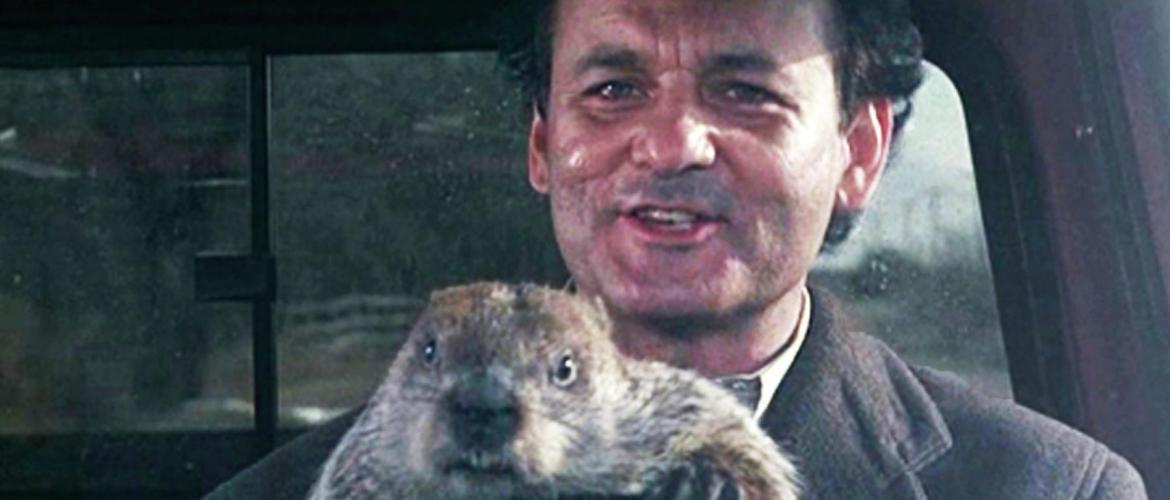
In 1993, the movie Groundhog Day starring Bill Murray popularized the usage of “groundhog day” to mean something that is repeated over and over. Today, tens of thousands of people converge on Gobbler’s Knob in Punxsutawney each February 2 to witness Phil’s prediction. The Punxsutawney Groundhog Club hosts a three-day celebration featuring entertainment and activities.
How often is the Groundhog correct?
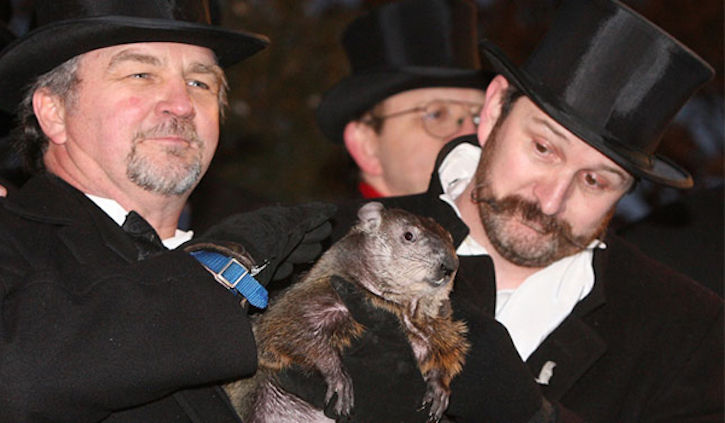
Punxsutawney Phil the most famous groundhog was first tasked with predicting the upcoming spring weather in 1887, and the process hasn't changed much since. The Punxsutawney Groundhog Club, of Punxsutawney, Penn., takes care of Phil year-round, and on each Feb. 2, members of the club's Inner Circle rouse Phil at sunrise to see if he casts a shadow. (Contrary to popular belief, Phil doesn't actually have to see his shadow he just has to cast one to make his wintry prophecy .)
According to the Groundhog Club's records, the various incarnations of Punxsutawney Phil have predicted 99 forecasts of more winter and 15 early springs. (There are nine years without any records, and even the Punxsutawney Area Chamber of Commerce, which keeps track of these things, doesn't know what happened to Phil during those years.) Data from the Stormfax Almanac's data shows that Phil's six-week prognostications have been correct 39 percent of the time.
Phil does a shade poorer when you check his performance against actual weather outcomes since 1969, when the accuracy of weather records is less in question, said Tim Roche, a meteorologist at Weather Underground. From 1969 on, Phil's overall accuracy rate drops to 36 percent.
So as you can see. Phil struggles with long range forecast much like everyone else. They just aren't trustworthy. Too much can happen in a short period of time to throw off a long range forecast.
The end result is no matter what the groundhog sees or predicts. There is still six more weeks of the winter season. Anything can and probably will happen as it relates to winter for the next six weeks. The one thing you can count on is that Rowan County Weather will be right here to keep you posted on all weather events as they happen! As always thank you for following Rowan County Weather!